
Stop Soil Erosion Before It Worsens
Retaining Walls in Tyler for sloped properties losing soil after heavy rain
Benchmark Landscaping Tyler installs retaining walls for residential and commercial properties across Tyler, Texas where sloped terrain and seasonal rainfall create consistent erosion problems. You see soil washing down slopes after storms, exposing tree roots and leaving uneven terrain that makes mowing and landscaping difficult. A properly built retaining wall holds back soil, redirects water flow, and turns a failing slope into a stable, usable section of your yard.
Retaining walls address elevation changes by creating level zones and preventing soil migration. East Texas receives enough rain that unmanaged slopes lose topsoil each season, undercutting foundations, pooling water near structures, and creating muddy runoff. Walls built from stone, concrete block, or timber anchor into stable ground and use drainage systems to manage water pressure that would otherwise push the structure forward or allow saturation behind it.
If your property shows signs of washout or uneven grading, reach out to discuss how a retaining wall system can stabilize your landscape in Tyler.
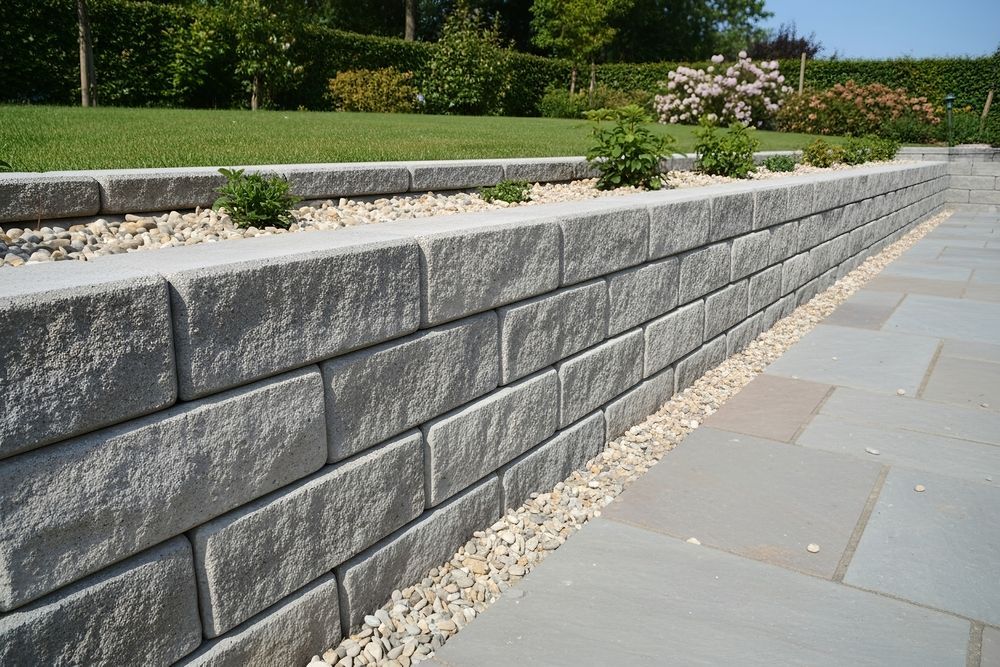
How Retaining Walls Are Built to Last
Building a retaining wall starts with excavation and base preparation. You need compacted gravel or crushed stone to create a level footing that will not shift under load. The base must extend below the frost line and provide drainage so water does not accumulate behind the wall. Without proper drainage, hydrostatic pressure will eventually push the wall outward, causing cracks or complete failure.
Once the wall is complete, you will notice the slope no longer sheds soil onto walkways or driveways. Water runs along the base or through drainage channels instead of pooling against your foundation. The retained area stays level through storms, allowing you to plant, mulch, or lay sod without concern that the next rain will wash it downhill. Benchmark Landscaping Tyler uses materials suited to the height and load requirements of each site, ensuring the structure performs as intended over time.
Taller walls require engineered footings and may need geogrid reinforcement or tiebacks anchored into the hillside. Walls over four feet often require permits and inspections to verify structural stability. Decorative veneers or capstones can be added after the core structure is built, but they do not contribute to the wall's load-bearing capacity. Maintenance includes clearing weep holes, inspecting for settling, and replacing damaged blocks before failure spreads.
Common Questions About Retaining Wall Installation
Property owners in Tyler often ask how retaining walls will perform given local soil types and weather patterns. Here are answers to the most frequent questions.
- What materials work best for retaining walls in Tyler? Concrete blocks and natural stone both perform well in East Texas clay soils, provided the base is compacted and drainage is installed. Treated timber is an option for shorter walls but has a limited lifespan compared to masonry.
- How deep does the footing need to be? The footing depth depends on wall height and soil type, but most residential walls require at least six inches of compacted base material below grade to prevent settling.
- Why do retaining walls lean or crack over time? Walls fail when water pressure builds behind them without a drainage path, when the base settles unevenly, or when the backfill is not compacted. Proper installation prevents these issues.
- When should a retaining wall include drainage pipe? Any wall over two feet tall should have perforated pipe behind it to direct water away from the structure. This prevents saturation and reduces pressure on the blocks or stones.
- How long does installation take? A typical residential retaining wall takes between three and seven days depending on height, length, and site access. Excavation and base prep account for most of the time.
When your property shows erosion or grade issues, a retaining wall provides a permanent solution that protects structures and restores usable yard space. Contact Benchmark Landscaping Tyler to schedule an evaluation and discuss the design options that fit your site.